
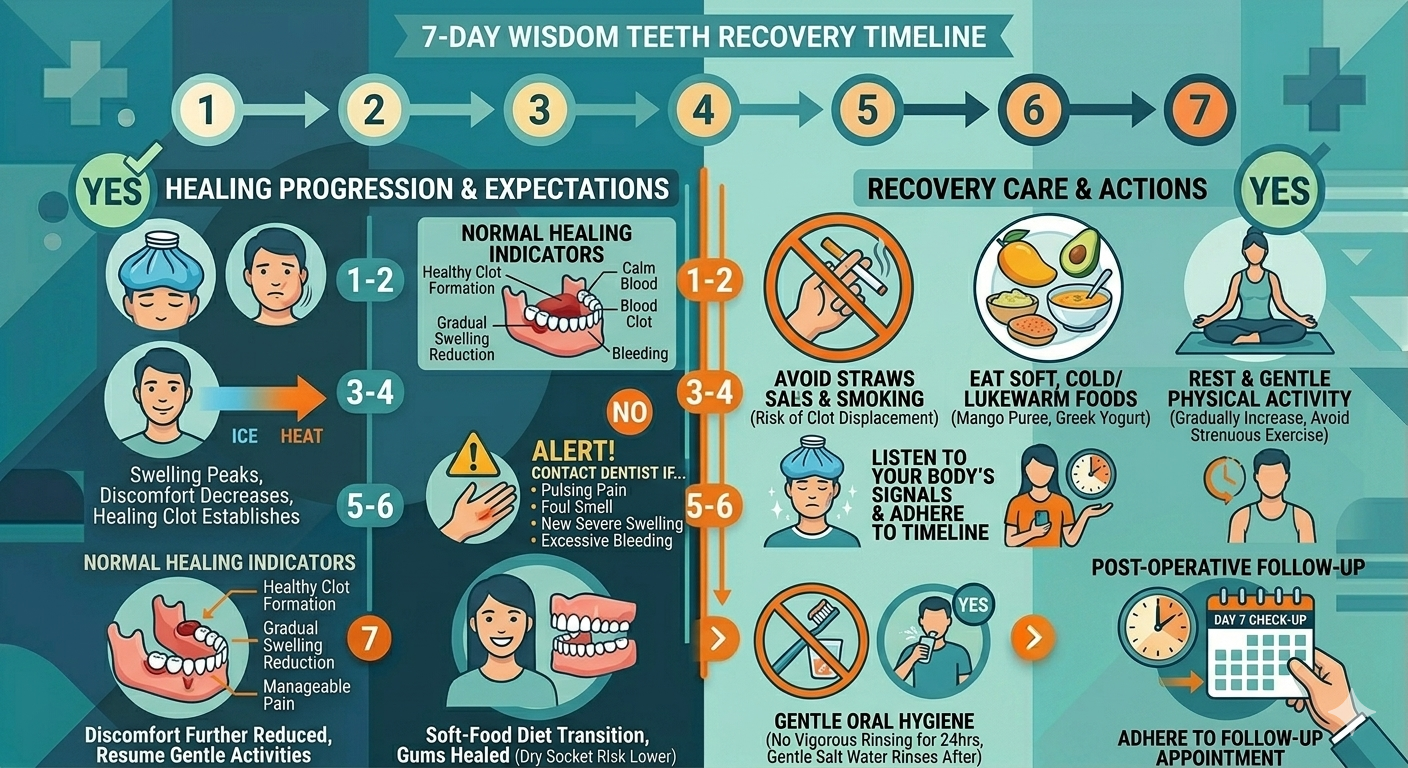
It’s the middle of the night and you’re looking in the mirror wondering if your recovery is on track. Oral Surgery recovery isn’t a straight line—it’s a series of stages. Understanding what is “normal” versus what is a “red flag” will give you the peace of mind you need to heal.
The Recovery Roadmap
- Day 1 (The Foggy Day): You will feel sleepy if you had the sedation. Minor oozing is normal; keep biting on gauze until it stops. Pro Tip: Replace gauze every 30 minutes until it’s only light pink. Once it is light pink you can remove the gauze. If you eat something a little firm, it may cause some bleeding. You can take a piece of gauze and hold pressure for an hour to help stop the bleeding. After using gauze for 1-2 hours and it is still bleeding, you can try using a wet tea bag(black tea works best) and hold the tea bag over the bleeding site with firm pressure for an hour. Once the bleeding has become minimal, remove the gauze and do not sleep with them in.
- Day 2-3 (The Peak Swelling): Many patients are surprised to find they look more swollen on Day 3 than they did on Day 1. This is normal! You may also notice slight bruising on the cheek, face, or neck.
- Day 4-5 (The Turning Point): The swelling should begin to subside, and you should be able to open your mouth a bit wider. This is when the “stiffness” usually sets in.
- Day 7 (The New Normal): Most patients return to school or work today. Your stitches (if you had them) may begin to dissolve and fall out. Stitches will fall out on their own in 3-10 days, unless you had a bone graft, then the doctor will remove them 4 weeks after surgery. If they become loose, try to not play with them and have the doctor remove them at your next follow up.
The “Call Us Immediately” Checklist
While complications are rare at our Coral Springs/Coconut Creek/Margate/Boca Raton area clinic, we want you to be vigilant. Call our office if you experience:
- Fever: A temperature over 101°F can indicate a post-operative infection.
- Persistent Numbness: If your lip, chin, or tongue feels “asleep” more than 24 hours after surgery.
- Pus or Foul Odor: A sign that bacteria has entered the extraction site.
- Severe Radiating Pain: Pain that medication won’t touch, especially if it shoots up toward your ear.
The Diet Do’s and Don’ts
✅ The DO’s: What to Eat and Drink
- Do eat soft, bland foods: For the first few days, stick to foods like fish, pasta, soups, yogurt, mashed potatoes, scrambled eggs, cooked vegetables, ground meats, and ice cream.
- Do consume warm, cold, or frozen foods: Keep your meals and liquids at mild or cool temperatures.
- Do use a cup or a spoon: Use these everyday utensils for all your eating and drinking needs.
- Do take food and liquids frequently: It is important to stay hydrated and nourished throughout your recovery.
- Do eat and drink as soon as you get home: Start taking in fluids and food upon arriving home to help your recovery and settle your stomach.
- Do take your medications with food: Always eat something when taking your pain pills, steroids, or antibiotics to prevent nausea and an upset stomach.
🚫 The DON’Ts: What to Avoid
- Don’t use a straw for 1 week: The suction can dislodge the blood clot and cause severe complications.
- Don’t eat hot foods: Avoid anything with a high temperature, including hot soups or hot coffee.
- Don’t eat spicy or highly seasoned foods: These will irritate the surgical site and cause pain.
- Don’t eat citrus foods: The acidity in citrus will hurt the healing area.
- Don’t eat crunchy or hard foods: Avoid items like nuts, chips, French baguettes, raw vegetables, or corn kernels for several days. These hard pieces can easily get stuck inside the surgical site and cause infection or damage.
- Don’t drink alcohol for 1 week: Completely avoid alcoholic beverages for at least 7 days after surgery, and never mix alcohol with your pain medications.
- Don’t take medications on an empty stomach: Taking pills without food or swallowing blood on an empty stomach is a primary cause of nausea and vomiting.
Our goal is to make your South Florida oral surgery experience as comfortable as possible. We are here for you every step of the way, from the first consultation to your final check-up.